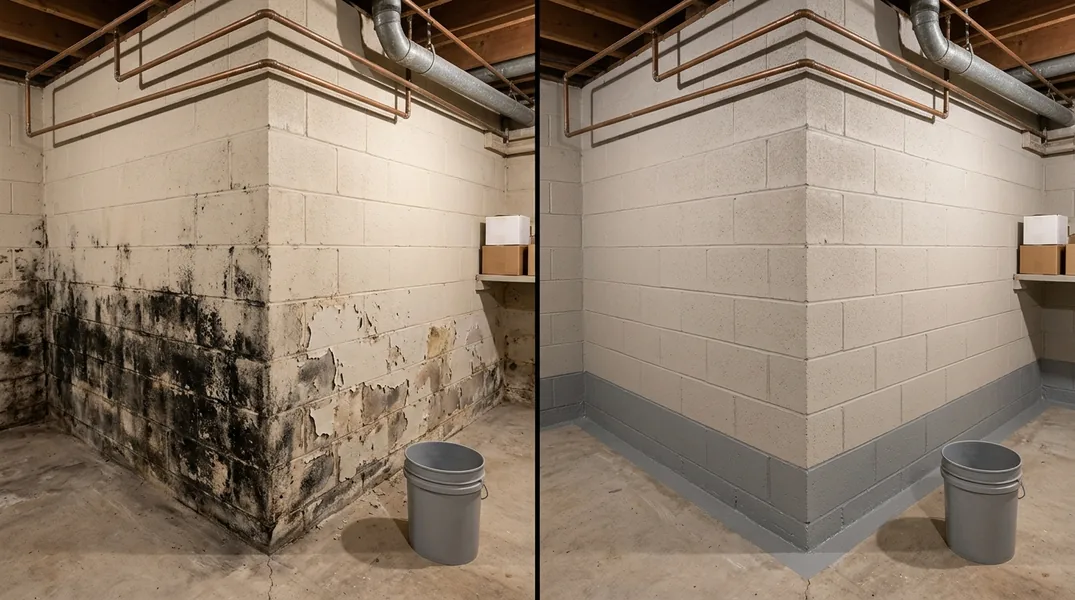
Why Aurora Homes Face Unique Waterproofing Challenges
Living in Aurora means dealing with a climate that swings from frozen winters to wet springs, and that cycle puts real stress on basements. The soil around many homes here contains heavy clay that swells when saturated and shrinks when dry, creating constant movement against foundation walls. When snowmelt and April showers arrive, that clay traps water against the foundation instead of letting it drain away naturally. Homeowners in older neighborhoods near the Fox River often discover that decades of freeze-thaw cycles have opened hairline cracks in poured concrete or worn down mortar joints in block walls.
This is why Basement Waterproofing is not a one-size-fits-all decision in Illinois. The right approach depends on your foundation type, the grade of your lot, how the water is entering, and what you want to protect. Before you choose between interior and exterior systems, it helps to understand exactly how each one works and what problems each solves best.
How Interior Drain Tile Systems Work
An Interior Drain Tile System is installed along the inside perimeter of your basement footing. The crew breaks out a narrow strip of concrete floor, digs a trench down to the footing, and lays perforated pipe covered in washed gravel. That pipe channels water to a sump pit, where a pump lifts it out and away from the house. The system is finished with new concrete and often a wall vapor barrier that directs seepage down to the drain rather than letting it pool on the floor.
The biggest advantage is that interior work happens entirely inside your home, so there is no digging up landscaping, patios, or driveways. It can be done year-round regardless of frost, and it typically costs less than excavating the exterior. Interior systems are excellent at managing hydrostatic pressure that pushes water up through the floor-wall joint, which is the most common leak point in Aurora basements. The tradeoff is that the system manages water after it enters the foundation area rather than stopping it at the wall.
How Exterior Basement Waterproofing Works
Exterior Basement Waterproofing attacks the problem from the outside. Crews excavate down to the footing, apply a waterproof membrane or coating to the foundation wall, install drainage board, and lay exterior drain tile that carries water away from the house by gravity. The soil is then backfilled with proper grading and often a layer of gravel to improve drainage. This is the original line of defense, stopping water before it ever touches the foundation wall.
Exterior systems are ideal when the foundation itself is damaged, when bowing or settling is a concern, or when you are already planning major landscaping work. They also protect the wall from soil moisture that causes efflorescence and long-term concrete deterioration. The downside is cost and disruption: excavation is labor-intensive, requires heavy equipment access, and can damage mature landscaping. In North Aurora and similar communities, tight lots with fences and decks sometimes make full exterior excavation impractical.
Drain Tile vs Exterior Membrane: Key Differences
When homeowners search for a waterproofing comparison, the drain tile vs exterior membrane question usually comes down to where the water is coming from. Interior drain tile intercepts water at the footing inside the basement and relies on a sump pump to discharge it. Exterior membrane creates a barrier on the outside face of the wall and uses exterior drain tile to move water away by gravity. If your issue is a wet floor, water seeping at the cove joint, or a damp musty smell after heavy rain, interior drain tile is often the most direct fix. If you have visible wall cracks, bowing, or water staining high on the wall, exterior work may be necessary.
Many Aurora homes actually benefit from a combination. Foundation Waterproofing is not about picking a side; it is about matching the solution to the failure. A reputable contractor will inspect your foundation, check the grading, and explain whether interior, exterior, or a hybrid approach makes sense. If a company pushes one method for every house without looking, that is a red flag.
Basement Waterproofing Cost in Aurora: What to Budget
Homeowners always want to know what pricing looks like before committing. Interior drain tile systems generally cost less because they involve less excavation and can be completed in a few days. Exterior waterproofing costs more due to excavation, membrane materials, and landscaping restoration, and the final number depends heavily on linear footage, access, and whether a sump pump or new drainage is included. Every basement is different, so a firm quote should follow an on-site inspection rather than a phone estimate.
It also helps to think beyond the initial price. A properly installed system protects finished basement space, prevents mold, and can add usable square footage to your home. Cheap fixes like patching cracks from the inside often fail within a season because they do not address the water pressure behind the wall. Ask for a written scope of work, a warranty, and a clear explanation of what happens if the system needs service later. For homeowners in Montgomery and Sugar Grove, the same principles apply: the right system is the one designed for your specific soil and foundation conditions.
Basement Waterproofing Near Me: When to Call a Pro
If you are searching for basement waterproofing near me in the Aurora area, start by watching for warning signs: water on the floor after storms, white powder on the walls, musty odors, or cracks that seem to widen over time. These are not problems that resolve on their own, and delaying usually makes them more expensive. A professional inspection can identify whether the source is hydrostatic pressure, poor grading, a failed sump pump, or a structural issue that needs immediate attention.
Aurora Waterproofing serves homeowners across the region and can walk you through your options without pressure. Call (331) 210-0522 to schedule a free estimate and get a clear, honest recommendation for your home. Whether the answer is an interior drain tile system, exterior waterproofing, or a targeted repair, the goal is the same: a dry basement and peace of mind through every Illinois season.
Looking for a professional basement waterproofing contractor in Aurora? Aurora Waterproofing responds fast for all your basement waterproofing needs.
Get a Free QuoteOur services: Basement Waterproofing · Interior Drain Tile System · Exterior Basement Waterproofing