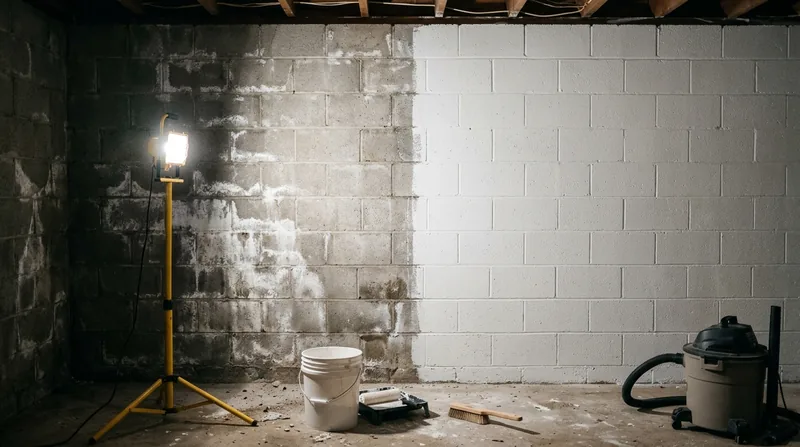




Basement Wall Sealing in Aurora: Solving Damp Walls on Fox Valley Foundations
Aurora sits on flat glacial clay plains above a high water table, and the Fox River cuts right through it. That combination means water has nowhere to go fast, especially during summer cloudbursts like the July 1996 storm that dropped about 17 inches on the city. Whether your home is an 1890s Italianate on a cut limestone foundation in the Near Westside historic district, a 1950s brick ranch on a concrete block basement, or a 2010s two-story on the Far East Side with a deep poured-concrete wall, damp masonry is a common thread. Basement Wall Sealing in Aurora addresses the surface symptoms you can see: efflorescence, weeping walls, and that musty smell after spring snowmelt. We tell you honestly whether a sealer will fix the problem or whether hydrostatic pressure is pushing water through and a different approach is needed. Start with a free basement inspection so we can identify what you are actually dealing with.
Why Basement Wall Sealing Matters on Aurora's Glacial Clay and River Bluffs
Glacial clay soil holds water like a sponge and releases it slowly against your foundation walls. Add hard freeze-thaw cycles and Fox River flooding, and the masonry on older Aurora homes takes a beating. Brick and limestone foundations in the Tanner and Pigeon Hill historic districts often show efflorescence, which is mineral salt pushed out by moisture moving through the wall. On 1990s and newer poured walls in Naperville and Montgomery, the issue is usually dampness at the cove joint or fine surface seepage. Sealing is the right first step when the wall is damp but not actively leaking under pressure.
- We remove efflorescence and loose parging before any sealer goes on, because a sealer over salt bloom will fail.
- We identify whether the moisture is surface condensation, capillary rise, or hydrostatic pressure pushing through the wall.
- We apply penetrating sealers on porous brick and block, and membrane sealers where the wall face needs a flexible barrier.
- We check grading and downspout extensions, because roof water dumped at the foundation undoes any sealer.
If the inspection shows water entering at the cove joint or through multiple wall cracks, we say so and point you toward a drainage solution rather than selling a sealer that will not hold.
Key info: A 1920s brick foursquare near downtown Aurora had chalky white efflorescence across the whole north wall. The wall was damp but not leaking. We removed the bloom, applied a penetrating sealer, and extended two downspouts. That was the whole fix. A 1990s home in Montgomery with water on the floor after every heavy rain needed an interior drain tile system, not a sealer.
For official guidance on foundation and drainage permits in the city, check the City of Aurora building department before any work that alters drainage.
How We Seal Basement Walls in Aurora Homes
We start by finding the source of the moisture, not by opening a bucket of sealer. On a cut limestone foundation in the Near Westside, that means checking mortar joints and the footing line. On a poured wall in North Aurora, we look at form tie holes, the cove joint, and hairline shrinkage cracks. The prep work decides whether the sealer lasts.
- We walk the basement and exterior grade, note efflorescence patterns, and test for moisture with a meter.
- We remove efflorescence, loose parging, and any failing paint or previous coating from the wall face.
- We fill non-structural cracks and tie holes with hydraulic cement or epoxy before sealing, so the sealer has a solid surface.
- We apply the sealer by brush or spray, two coats on porous block, and back-roll for even coverage.
- We correct grading and downspout discharge at the same visit when that is contributing to the dampness.
- We leave you with a written note on what was sealed, what was not, and what to watch for next spring.
If we find active seepage under hydrostatic pressure, we stop and explain the options, including an interior drain tile system that relieves the pressure instead of fighting it.
Key info: A 1950s split-level in Aurora's east side had a concrete block basement with damp walls and a musty smell every June. We sealed the block, extended the downspouts, and regraded a low spot along the driveway. No water on the floor the following spring. Same block wall, different outcome than a drainage job because the pressure was not there.
Sealing Methods We Use and When Each One Fits
Not every damp wall needs the same product. The table below shows the approaches we use on Aurora foundations and the conditions each one suits.
| Approach | Description | Best for |
|---|---|---|
| Penetrating sealer | Sinks into porous brick, block, or limestone and blocks capillary moisture without a surface film. | Damp masonry walls with efflorescence but no standing water. |
| Membrane sealer | Flexible coating that bridges hairline cracks and resists moderate pressure. | Poured concrete walls with fine shrinkage cracks. |
| Crack injection plus sealing | Epoxy or polyurethane injection fills the crack, then the wall face is sealed. | Walls with visible vertical cracks that weep after rain. |
| Sealing with drainage correction | Sealer plus grading, downspout extensions, and footing drain checks. | Dampness driven by roof water and flat clay grading. |
We choose the method after the inspection, not before, because the wrong sealer on a pressured wall is money spent twice.
Basement Wall Sealing Cost in Aurora: What to Expect
Most basement wall sealing jobs in Aurora start around $1,500, and that figure covers surface prep, efflorescence removal, and sealer application on a typical basement wall run. The price moves with wall length, wall material, and how much prep the surface needs. A cut limestone foundation in the Tanner historic district takes more labor than a poured wall in a 2015 Far East Side home because the stone face is uneven and the mortar joints need attention. Crack injection, if needed, adds to the scope.
We give you a written scope before work starts. Getting two or three estimates is smart, and we encourage it. Compare what each contractor includes in prep and whether they check grading and downspouts, not just the sealer price. Our full pricing overview shows how the numbers break down. If the inspection shows hydrostatic pressure, the honest answer may be that sealing alone will not solve it, and we will tell you that before you spend the money.
Choosing a Basement Wall Sealing Contractor Near Me in Aurora
Ask three questions before you hire anyone for wall sealing near Aurora. First, are they licensed and insured, and can they show a certificate? Second, do they inspect and diagnose before quoting, or do they quote a sealer over the phone? Third, will they put the scope in writing, including what happens if they find active seepage during prep? Check references from Aurora or North Aurora homeowners with foundations like yours. Permits are commonly required for structural foundation repair and work that alters drainage, and rules vary by jurisdiction, so confirm with the City of Aurora building department. Our contact page is the fastest way to schedule an inspection and get a written estimate.
Basement Wall Sealing in Aurora: Pricing Guide
| Service | Price | Details |
|---|---|---|
| Single wall sealing (block or poured) | Starting at $1,500 | Includes efflorescence removal, surface prep, and one sealer application on a standard wall run; longer walls move the price up |
| Full basement wall sealing | Starting at $2,400 | Covers all accessible walls, two coats on porous block, and downspout and grading check at the same visit |
| Crack injection plus wall sealing | Starting at $2,900 | Epoxy or polyurethane injection on visible cracks before sealing; number and width of cracks drive the final number |
| Historic limestone or brick foundation | On estimate | Uneven stone faces and mortar joints need hand prep and a site visit before we quote a firm number |
| Travel | Included | in Aurora and surrounding Fox Valley areas, no separate call-out or mileage fee |
| Estimate | Free | Response within 24h at (331) 210-0522, no obligation to book |
Indicative pricing, the exact cost depends on square footage, finish, and site access. Free personalized estimate within 24h at (331) 210-0522.


