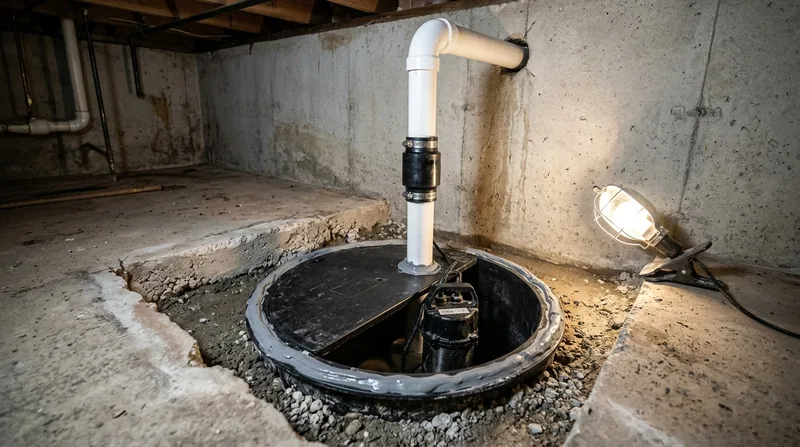




Sump pump installation & replacement in Aurora is the single most common call we get after a Fox Valley cloudburst, and for good reason. This city sits on flat glacial clay plains across the Fox River, with a water table that stays high through spring and never really drops in a wet summer. Victorian and Italianate homes in the Near Westside and Tanner historic districts still drain through cut limestone and brick foundations, while 1990s and newer two-story homes on the Far East Side sit over deep poured-concrete basements that fill fast when the water table rises. We install new sump pits, replace burned-out pumps, and correct discharge lines that dump water right back against the foundation. If your basin is dry one day and overflowing the next, the pump is usually the weak link, not the drain tile.
Why Sump Pump Failure Hits Aurora Basements Harder Than Most
Aurora gets the full Midwest package: spring snowmelt, hard freeze-thaw cycles, and summer storms that can drop inches in an hour, like the July 1996 event that dumped about 17 inches on the city. The glacial clay under most of Aurora does not absorb water quickly, so it pushes against the foundation as hydrostatic pressure and finds the path of least resistance, usually the sump basin. Older homes on Riddle Highlands and Pigeon Hill often have undersized pits or pumps that were never sized for a deep basement. Newer Far East Side and Naperville-style subdivisions have deeper basements and more volume to move.
- A pump that runs constantly during spring melt is usually undersized for the basin volume.
- A missing or failed check valve lets water drain back into the pit after every cycle.
- A discharge line that ends two feet from the wall just recycles water into the same clay soil.
- Cast iron or plastic pumps older than about ten years fail without warning, often mid-storm.
If your pump is cycling every few minutes or you hear it running after the rain stops, the problem is usually the pump or the discharge routing, not the drain tile.
Key info: In the Near Westside and Tanner historic districts, we routinely find sump pits cut into cut limestone foundations with no sealed lid and a discharge line tied into the sanitary sewer. That setup is a code issue in most Fox Valley jurisdictions and a backflow risk during heavy rain. We correct both while we are in the pit.
For the official position on discharge and drainage connections, check the City of Aurora's building permit pages before you schedule work: City of Aurora, Illinois.
How We Install or Replace a Sump Pump in Aurora, Step by Step
We start by looking at the basin, not the pump. A new pump in a cracked or undersized pit is money wasted, and a pump sized for a shallow 1950s brick ranch on the west side is not the pump a deep poured-concrete basement on the Far East Side needs. We measure static water level, check the weeping tile entry points, and confirm the discharge can actually reach grade and drain away from the house. If the basin is sound, we replace the pump and fix the line. If it is not, we cut a new pit.
- We inspect the basin, the drain tile entry, and the discharge route before quoting a pump.
- We size the pump to the basin volume and the head height, not to whatever is on the truck.
- We set a sealed, gasketed lid to keep soil, radon gas, and basement humidity out of the pit.
- We install a brass or PVC check valve and route the discharge line to a frost-free outlet well away from the foundation.
- We test the float switch through several full cycles and confirm the pump keeps up with inflow.
Every install ends with a wet test, not a dry one, because a pump that runs fine in a dry pit can still lose prime under real inflow.
Key info: A North Aurora split-level we serviced last spring had a 1/3 HP pump in a 24-inch basin fed by three drain tile runs. It ran continuously during the March melt and burned out in two seasons. We upsized to a 1/2 HP cast iron pump, sealed the lid, and extended the discharge 12 feet downslope toward the swale. It has not cycled continuously since.
If the pit itself is the problem, an interior drain tile system is often the better answer than replacing the pump every few years.
Sump Pump Approaches We Use in Aurora
Not every basement needs the same setup. A 1920s brick foursquare on the west side with a shallow pit and a gravity discharge to the parkway is a different job from a 2015 two-story on the Far East Side with a deep basin and a high water table. Here is how we match the approach to the house.
| Approach | Description | Best for |
|---|---|---|
| Direct pump replacement | Swap the pump and check valve in an existing sound basin, keep the discharge route. | Basins in good shape with a pump that failed on age, not on volume. |
| New pit and pump install | Cut a new basin, tie in the drain tile, set a sealed lid, size the pump to inflow. | Older homes with no pit, undersized pits, or pits cut into limestone. |
| Discharge line correction | Reroute the line to a frost-free outlet, add freeze protection, keep water away from the wall. | Pumps that short-cycle because water drains right back to the foundation. |
| High-capacity pump upgrade | Upsize the pump and basin for deep basements and fast inflow during cloudbursts. | 1990s and newer deep poured-concrete basements on the Far East Side. |
| Battery backup add-on | Add a backup pump and battery to the existing pit for storm-related power loss. | Any home where the pump runs during outages, common in Fox Valley storms. |
Sump Pump Installation & Replacement Cost in Aurora: What to Expect
Most Aurora sump pump replacements start around $1,200 and go up from there depending on what we find in the pit. A straight pump and check valve swap in a sound basin sits at the low end. A new pit cut into a 1920s limestone foundation, a discharge line rerouted to a frost-free outlet, or a high-capacity pump for a deep Far East Side basement all add labor and materials. Homes in Montgomery and North Aurora built on flat former farmland often need the discharge extended further to reach a swale that actually drains.
We quote the pump, the basin work, and the discharge correction separately so you can see what each piece costs. Getting two or three estimates is smart, and any contractor who will not put the pump model and horsepower in writing is one to skip. You can see how we break down the full scope on our pricing page.
Key info: A Sugar Grove homeowner was quoted a full new pit system when the actual failure was a stuck float switch and a discharge line buried in clay. We replaced the switch, cleared the line, and the original pump is still running. Not every call needs a new basin, and we will tell you when it does not.
How to Choose a Sump Pump Contractor Near Aurora
Most sump pump work is straightforward, which means the difference between a good job and a callback is in the details: pump sizing, lid sealing, check valve quality, and where the discharge actually ends. Ask for the pump model and horsepower in the written estimate, and confirm the contractor carries liability insurance and workers' compensation. A one-truck operation may be fine, but you want a certificate of insurance before anyone cuts into your basement floor.
- Confirm the contractor is licensed and insured, and ask for the certificate before work starts.
- Get two or three written estimates that name the pump model and horsepower.
- Ask for references from Aurora jobs with the same foundation type as yours.
- Check whether the local building department requires a permit for the discharge connection, since rules vary by jurisdiction.
- Ask how the discharge will be routed and whether it will freeze in a Fox Valley January.
If a contractor cannot answer those questions on the phone, keep calling. We are happy to walk you through our scope and credentials, including our Basement Health Association membership, on our contact page.
Sump Pump Installation & Replacement Near Me: What Aurora Homeowners Should Know
When you search for sump pump work near me in Aurora, you will find plumbers, general handymen, and dedicated basement waterproofing contractors. A plumber can swap a pump, but the diagnosis of why the pump failed usually comes down to the drain tile, the basin, and the discharge route, which is below-grade waterproofing work. We look at the whole system: the weeping tile feeding the pit, the basin condition, the check valve, and where the water goes when it leaves the house.
That matters most in Aurora's older housing stock, where a pump that keeps burning out is often a symptom of a failing drain tile or a pit that fills faster than any residential pump can move water. In those cases the right fix is an interior perimeter drain correction, not a bigger pump. We will tell you which one you are looking at before you spend money.
If you want a second set of eyes on a pump that keeps failing, start with a free basement inspection and we will map the pit, the tile, and the discharge before quoting anything.
Sump Pump Installation & Replacement in Aurora: Pricing Guide
| Service | Price | Details |
|---|---|---|
| Sump pump replacement (existing basin) | Starting at $1,200 | Includes new cast iron pump, check valve, and wet test in a sound existing basin. |
| New sump pit and pump installation | Starting at $1,850 | Includes cutting a new basin, sealing the lid, and tying in existing drain tile. |
| High-capacity upgrade for deep basements | Starting at $2,400 | Upsized pump and basin for deep poured-concrete basements with fast inflow. |
| Discharge line correction | Starting at $450 | Reroutes the line to a frost-free outlet away from the foundation, priced by run length. |
| Battery backup add-on | Starting at $650 | Backup pump and battery added to an existing pit, priced by battery capacity. |
| Estimate | Free | Response within 24h at (331) 210-0522, no obligation to book. |
Indicative pricing, the exact cost depends on square footage, finish, and site access. Free personalized estimate within 24h at (331) 210-0522.


